Best low glycemic index foods for diabetes
For diabetes meal planning, GI can be one consideration, but carbohydrate amount, portion size, overall nutrition, medication and individual glucose…
Look up approximate glycemic index values from a short food list. GI is a comparison measure, not a score for overall food quality and not a prediction of your personal glucose response.
Type a food name above. Try apple, lentils, white bread, white rice, oats or potato.
GI compares the glucose response to a carbohydrate-containing test food with a reference food. Common categories are low (55 or less), medium (56–69) and high (70 or more). Values depend on the food variety, processing, test method and preparation.
Serving size and available carbohydrate matter. Glycemic load combines GI with available carbohydrate in the portion: GI × grams of available carbohydrate ÷ 100. A low-GI food can still provide a large carbohydrate load if the serving is large.
Rice variety, bread ingredients, fruit ripeness, oat processing, potato preparation and cooking time can all change published values. The same food may produce different responses in different people and when eaten with other foods.
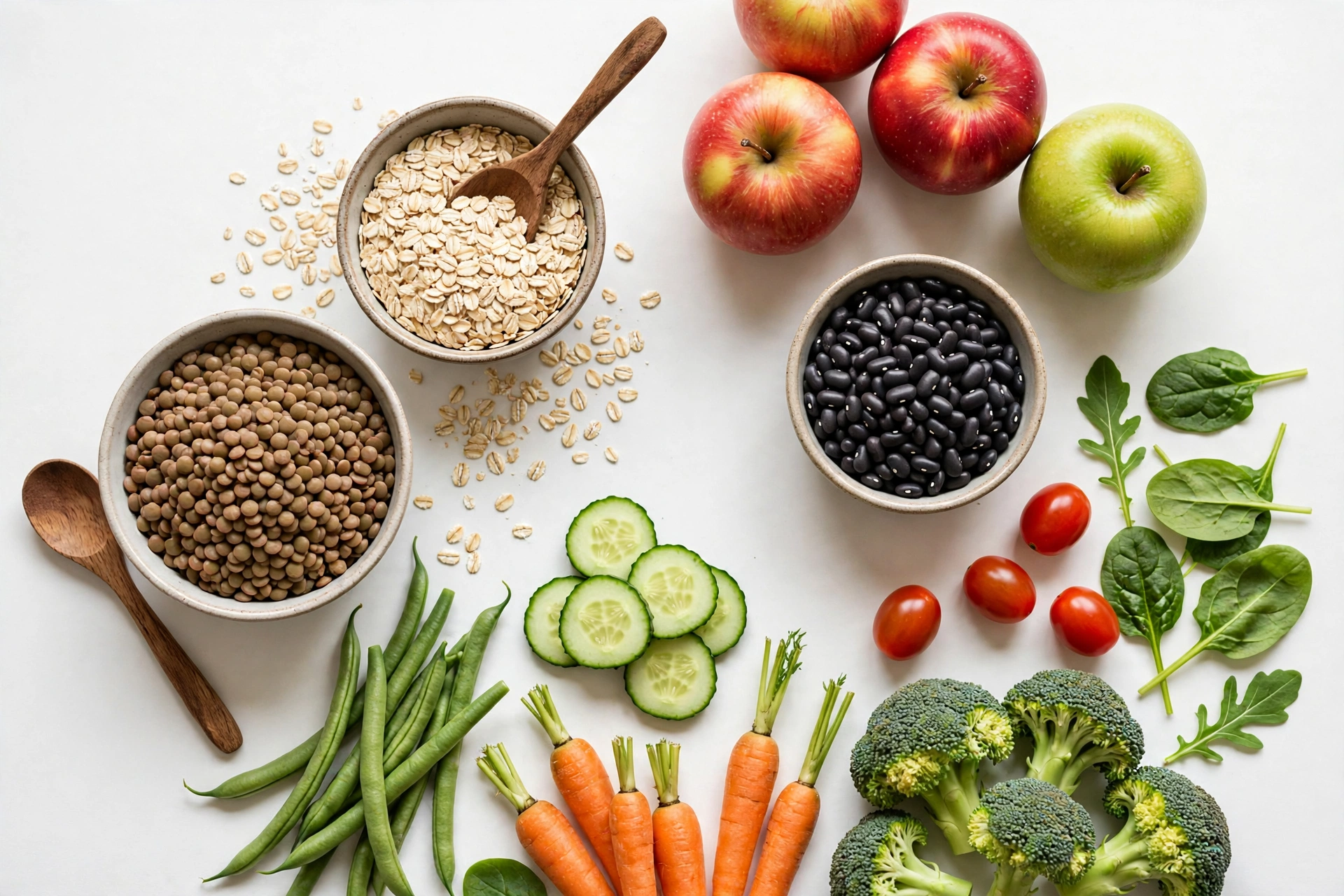
Consider fibre-rich vegetables, legumes, whole grains, nuts, seeds and suitable protein sources. GI can be one consideration, but also review portion size, fibre, sodium, saturated fat, cost and what is sustainable for you. If you have diabetes, follow the meal plan discussed with your care team.
No. GI does not measure all nutrients, sodium, saturated fat or overall dietary quality.
No. Portions, preparation, other foods, activity and individual physiology affect the response.
The University of Sydney Glycemic Index Database provides tested food entries and notes about the tested product.
The following primary and institutional resources support the medical or technical context discussed in this guide. Check the source directly for the latest details.
Continue with a related guide or open the free calculator that supports this topic.
For diabetes meal planning, GI can be one consideration, but carbohydrate amount, portion size, overall nutrition, medication and individual glucose…
GI is commonly grouped as low (55 or less), medium (56–69) and high (70 or more), but a chart is a guide rather than a food-quality score. Values depend…
Whole-wheat or seeded bread is not guaranteed to have a lower GI than white bread. Grain structure, milling, fibre, ingredients and processing all matter…