GMI vs A1C difference
GMI and laboratory A1C can differ because GMI uses mean CGM glucose from the selected period, while A1C is affected by red blood cell lifespan and…
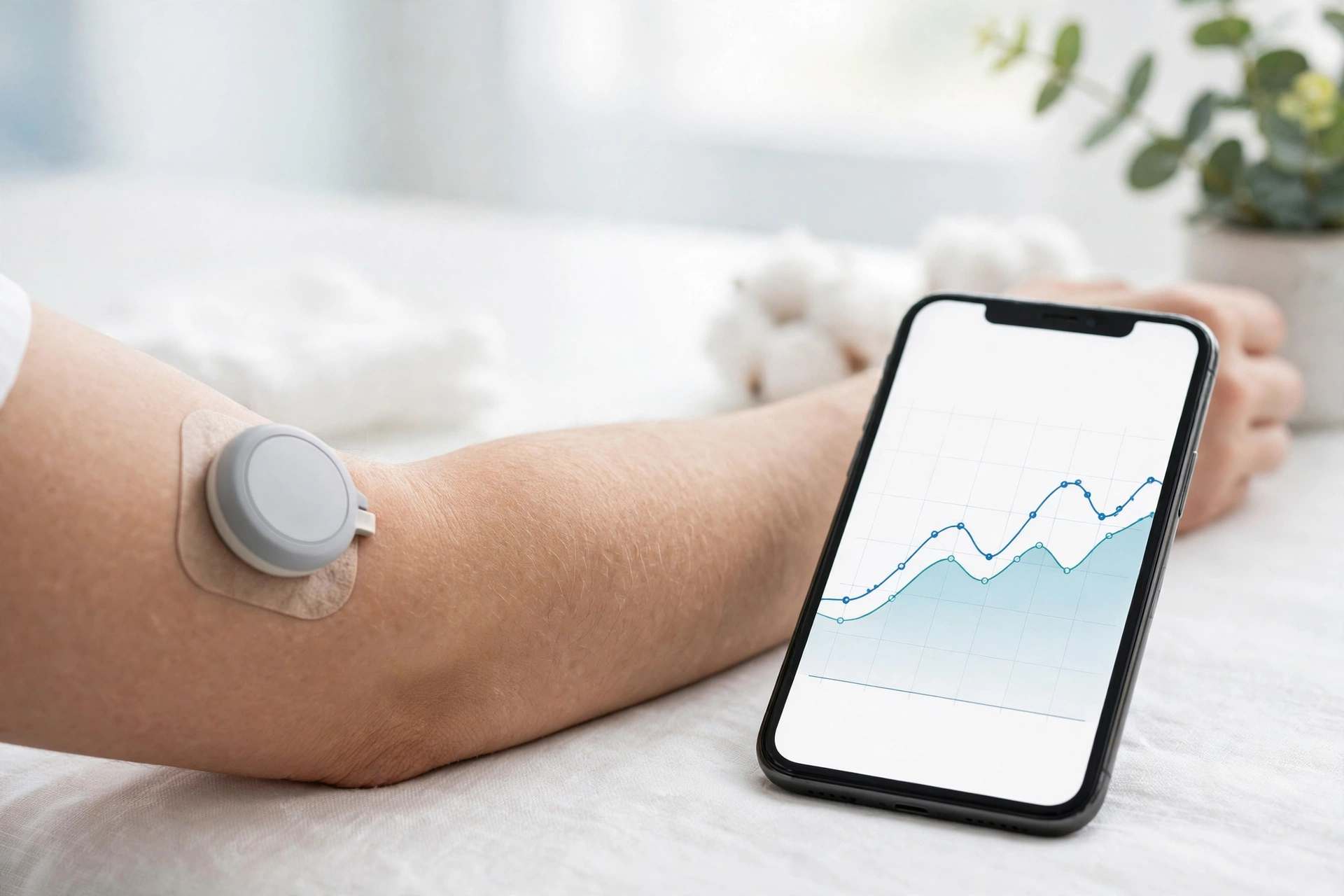
Calculate Glucose Management Indicator (GMI) from average CGM glucose. GMI is an A1C-like estimate derived from sensor data; it is not the same test as laboratory A1C.
GMI (%) = 3.31 + (0.02392 × mean glucose in mg/dL). For example, a mean CGM glucose of 154 mg/dL gives a GMI close to 7.0%. Convert mmol/L to mg/dL before entering the value.
A1C is measured in a blood sample and is influenced by red blood cell biology. GMI is calculated from average CGM glucose during the selected sensor period. A1C may be affected by anemia, hemoglobin variants, kidney disease, blood loss, transfusion, pregnancy and other conditions.
GMI is an average and can hide repeated lows, highs and variability. Review time in range, time below range, time above range, sensor wear and the dates included. Many adult CGM plans use a time-in-range goal around 70%, but goals vary by person and clinical situation.
A persistent difference is worth discussing with your diabetes care team. Bring the laboratory A1C date, CGM period, sensor wear percentage and medication changes. Do not change medication based on GMI alone.
No. GMI is calculated from CGM mean glucose, while A1C is measured in a laboratory blood sample.
GMI (%) = 3.31 + (0.02392 × mean glucose in mg/dL).
Yes. The measures cover different data and can be affected by different biological and technical factors.
The following primary and institutional resources support the medical or technical context discussed in this guide. Check the source directly for the latest details.
Continue with a related guide or open the free calculator that supports this topic.
GMI and laboratory A1C can differ because GMI uses mean CGM glucose from the selected period, while A1C is affected by red blood cell lifespan and…

GMI (%) is calculated as 3.31 + (0.02392 × mean glucose in mg/dL). For a CGM mean of 154 mg/dL, the estimated GMI is about 7.0%. The result is not a…
GMI stands for Glucose Management Indicator. It converts average CGM glucose into an A1C-like percentage using a published equation, but it is not the…