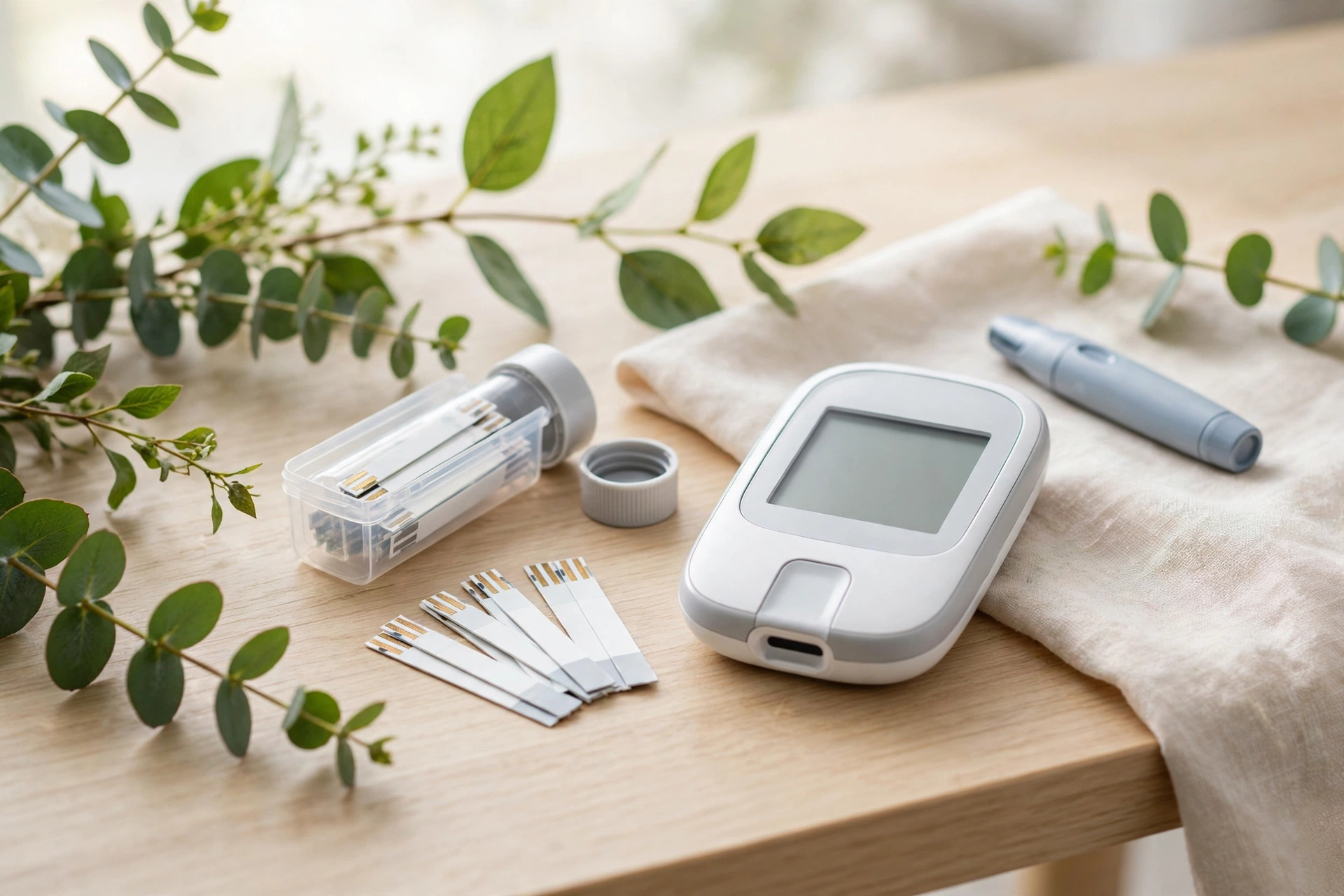
Blood Sugar Checker by Age
Compare a reading with the correct testing context. Includes fasting laboratory thresholds and 75-g OGTT guidance, with clear limits for home readings.
Blood glucose values only make sense when you know the test type, timing and measurement method. Standard diagnosis uses laboratory A1C, fasting plasma glucose or a standardized oral glucose tolerance test—not one isolated home reading.
Fasting plasma glucose is measured after at least eight hours without calories. A1C is measured in a laboratory and reflects longer-term glucose exposure. A 2-hour oral glucose tolerance test uses a standardized 75-g glucose drink. Random or after-meal home readings help with monitoring but are not interpreted using all of those diagnostic cutoffs.
An abnormal laboratory result should be reviewed with a healthcare professional. In the absence of unequivocal hyperglycemia, diagnosis generally requires confirmation with a second abnormal result. A meter result can alert you to a possible problem but does not replace the confirmatory testing process.
Record the date, time, fasting status, unit, test source and any relevant symptoms or medicines. If a value is unexpected, follow your meter instructions and discuss repeated patterns with a clinician.
Related free tool: Blood Sugar Checker by Age. Use it to calculate or organize values only within the limits described on its page.
This is general education, not an individual diagnosis or treatment plan. Never start, stop or change medication based on this article. For concerning symptoms or repeated unusual results, contact a qualified healthcare professional.
No. It explains common thresholds; diagnosis requires appropriate laboratory testing and clinician interpretation.
They can help monitor glucose, but laboratory tests are used to establish a diagnosis.
The following primary and institutional resources support the medical or technical context discussed in this guide. Check the source directly for the latest details.
Continue with a related guide or open the free calculator that supports this topic.
Compare a reading with the correct testing context. Includes fasting laboratory thresholds and 75-g OGTT guidance, with clear limits for home readings.
A home glucose reading of 140 mg/dL two hours after an ordinary meal is not automatically a prediabetes result. The 140–199 mg/dL diagnostic category…

A useful blood sugar chart separates fasting laboratory glucose, A1C and a standardized 2-hour 75-g oral glucose tolerance test. A usual meal or bedtime…

You cannot reliably know your current blood glucose from symptoms, taste, urine colour or a phone app alone. A glucose meter, a continuous glucose monitor…